

Capability: micro gas turbines
Micro gas turbines from 5 kW to 1 MW.
We design micro gas turbines, build prototypes and test them on our own test benches in Cottbus. Oil-free on foil air bearings and with a high-speed generator.
Scroll to explore the Powerhead.
X-ray view
What is inside a Powerhead.
The compressor, turbine, generator and bearings sit on a single shaft. Because each part depends on the others, we design everything together.
Spun up
100.000rpm
Oil-free, supported on air.
Above a certain speed, the shaft lifts off and runs on an air film thinner than a hair. In operation, it does not touch the bearing and needs no oil.
Exploded
Five components from one team.
Select a component to see the capability behind it.
And then
Off to the test bench.
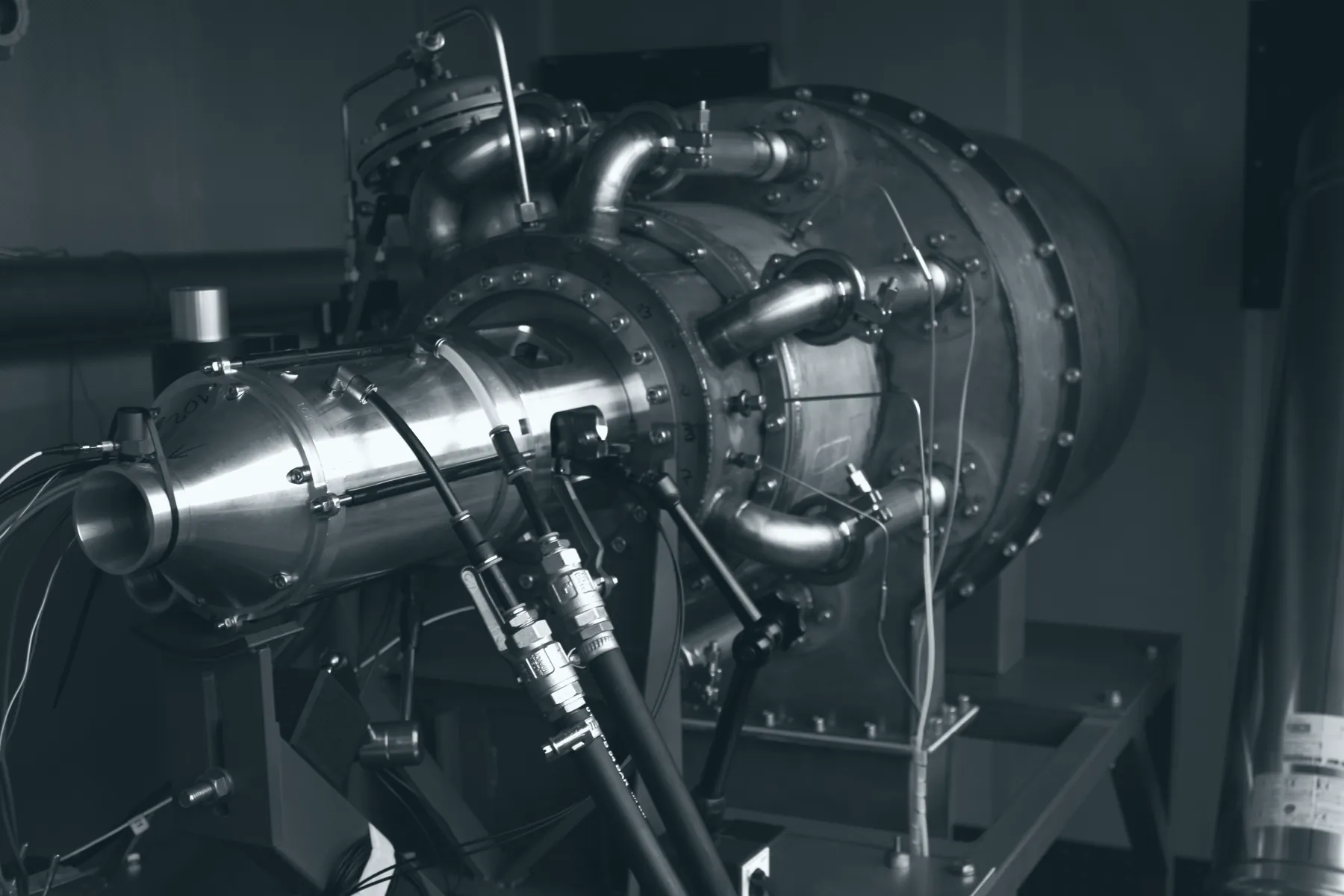
We design and build test benches for bearings, burners, power electronics and complete micro gas turbines, for our own machines and for customers.
Stylised representation, not to scale.
5 kW to 1 MW
electrical output of our system solutions
100,000 rpm
High-speed generators up to this speed
µm
Tolerances in turbo unit assembly
2012
ClinX Energy Systems founded in Cottbus
Try it yourself
How fast does a compressor wheel spin?
Drag the slider to see what speed the blade tip of a small compressor wheel reaches.
- Revolutions per second
- 0
- Blade tip speed
- 0
- That is
- 0
- Centrifugal acceleration at the tip
- 0
Example calculation for a compressor wheel with a diameter of 80 mm at 20 °C. Actual values depend on the design.
How a micro gas turbine is made
From the first sketch to the acceptance run.
In four steps from requirements specification to finished machine. This is how ClinX Energy Systems develops a micro gas turbine.
Sketch
It starts with a conversation and a sketch. Together with you, we clarify what the machine has to achieve and write it into the requirements specification.
- Requirements specification and functional specification
- First concept with interfaces
- Thermodynamic cycle calculation
Calculation
We design the compressor, turbine, bearings and generator together, because they influence each other.
- Aerodynamics and thermodynamics
- Rotor dynamics with Campbell diagram
- Structural analysis (FEM) and flow (CFD)
Component
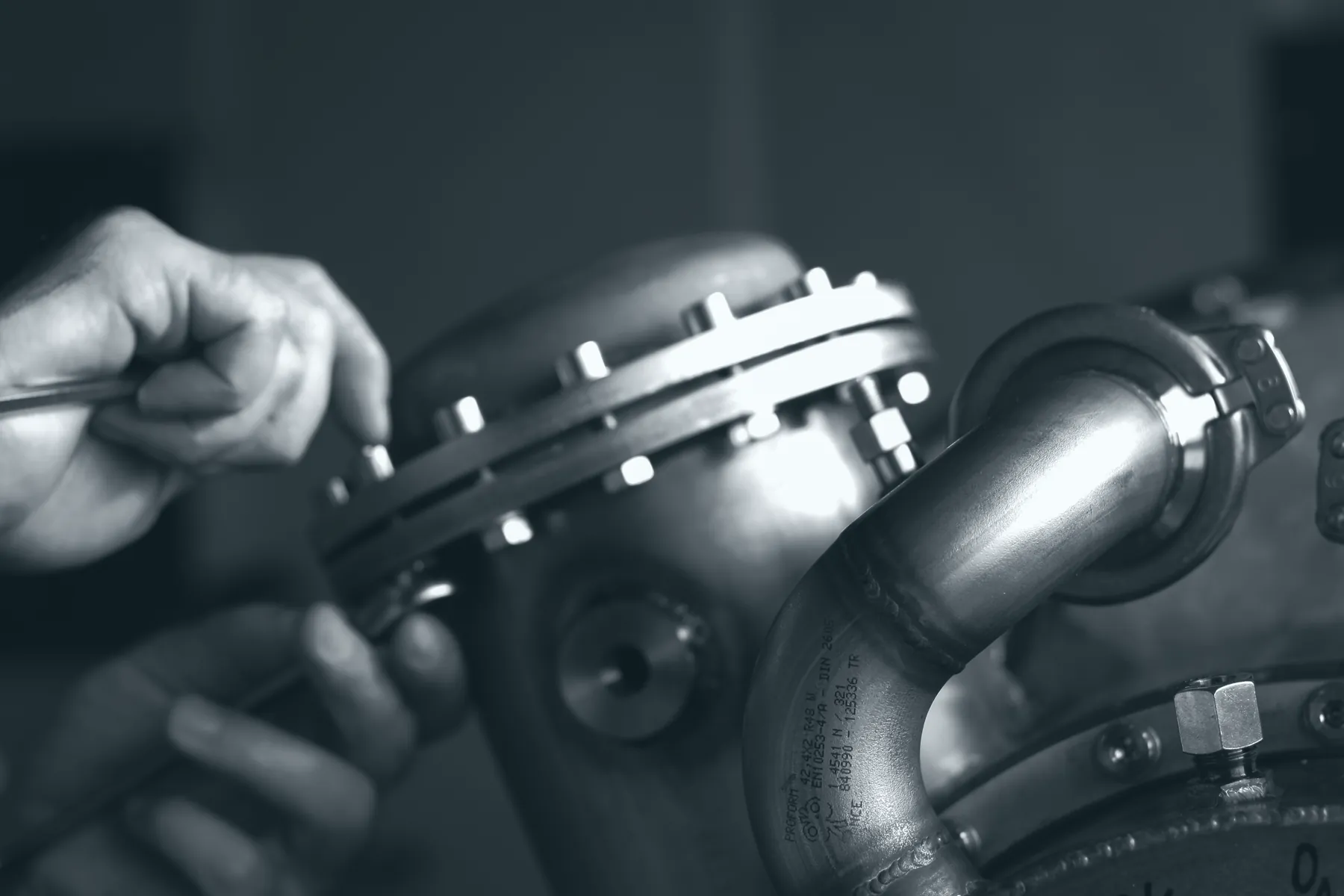
The detailed design becomes drawings, the drawings become components. Manufacturing takes place in our network, assembly at our site with tolerances in the micrometre range.
- Detailed design and drawing set
- Manufacturing and assembly
- Balancing and runout testing
Acceptance run
The finished machine runs on a test bench that we designed and built for it. There we verify every requirement from the requirements specification by measurement.
- Test bench for the measurement task
- Acceptance run
- Documentation and release
Externally fired micro gas turbines
Electricity and heat from solid fuels
In an externally fired micro gas turbine (EFGT), the fuel burns outside the turbine. A high-temperature heat exchanger transfers the heat to the compressed air. Only clean, hot air flows through the turbine.
This makes it possible to use fuels that no combustor can handle: wood, biogenic residues or dust-laden gases. Ash and pollutants stay on the furnace side. The hot exhaust air of the turbine returns to the furnace as preheated combustion air.
We develop externally fired micro gas turbines as a complete system: turbo unit, high-temperature heat exchanger and control, matched to the furnace.
What we do
- Thermodynamic cycle and system design for internally and externally fired micro gas turbines
- High-temperature heat exchanger between furnace and turbine
- Turbo unit on foil air bearings with high-speed generator
- Control for start-up, part load and load changes
- Testing of components and the complete system on test benches
Series production
From prototype to series production
If your micro gas turbine is to be built in quantity, we plan the series production with you: from design for manufacturing through assembly and fixtures to the end-of-line test station.
Questions about micro gas turbines
What is a micro gas turbine?
A small gas turbine with an electrical output of a few kilowatts up to about one megawatt. The compressor, turbine and generator usually sit on a common shaft that rotates very fast. With foil bearings, it runs entirely without oil.
What power output do your micro gas turbines have?
We develop micro gas turbines from about 5 kW to 1 MW electrical output.
How fast does a micro gas turbine rotate?
Small turbo units rotate very fast. Our high-speed generators are designed for up to 100,000 revolutions per minute.
Can micro gas turbines run on wood or residues?
Yes, as an externally fired micro gas turbine. The fuel burns in a separate furnace, and a high-temperature heat exchanger heats the compressed air. Only clean air flows through the turbine, and ash stays on the furnace side.
Are micro gas turbines suitable for hydrogen?
In principle, yes, but the combustor has to be adapted. Hydrogen burns faster and hotter than natural gas. We develop combustors for hydrogen and test them on our hydrogen test bench.
Who develops micro gas turbines in Germany?
Apart from research institutions such as the German Aerospace Center (DLR) and the technical universities, only a few companies develop small gas turbines completely. ClinX Energy Systems in Cottbus designs micro gas turbines, builds prototypes and tests them on test benches it has built itself.
Do you also support the transition to series production?
Yes. We help plan the series production: design for manufacturing, assembly concept and fixtures, end-of-line test stations and the qualification of manufacturing partners.

Tell us about your machine.
Requirements specification, sketch or just an idea: we will get back to you with an initial technical assessment.
+49 355 8695 9890
service@clinx-energy-systems.com